
Travel content creators have plenty of ways to earn commissions, but not every program pays fairly or converts well. Commission rates, cookie windows, and payout thresholds vary wildly across the industry, and a program that looks generous on paper can still underperform if its booking flow is clunky or its inventory doesn’t match your audience. Below are seven programs worth evaluating, along with what makes each one distinct.
TRAVEL BLOG CONTENTS
Booking.com Affiliate Partner Program
Booking.com runs one of the most recognizable affiliate setups in travel, and it’s accessible even to smaller sites. Commissions typically range from 25% to 40% of the platform’s own margin on a booking, which sounds abstract until you realize it translates to roughly 4-6% of the total booking value in most cases. The real advantage is inventory breadth: over 28 million listings across hotels, apartments, and alternative stays, which means almost any destination-focused content has something to link to.
The cookie window is short, only about 30 days, so this program rewards sites with high-intent readers close to booking rather than early-stage inspiration content. Payouts happen monthly once you clear a modest threshold, and the dashboard reporting is detailed enough to see which pages are actually driving conversions.
Expedia Group Affiliate Program
Expedia’s affiliate program covers its full family of brands, including Hotels.com, Vrbo, and CarRentals.com, all through one account. Commission rates hover between 3% and 6% depending on the vertical, with package bookings (flight plus hotel) sometimes paying more because of higher order values. This makes it a solid pick for sites that cover multiple trip components rather than just lodging.
One practical note: approval isn’t automatic. Expedia’s affiliate team reviews applications and sometimes rejects sites with thin content or low traffic, so it helps to have a functioning blog with at least a dozen relevant posts before applying.
Agoda Affiliate Program
Agoda’s affiliate program is worth a look specifically for creators writing about Southeast Asia, Japan, and other Asia-Pacific markets, where the platform has deeper hotel inventory than many Western-focused competitors. Commission rates run up to 7%, among the higher rates in the hotel booking space, and the cookie duration is a generous 14 days on top of same-session tracking.
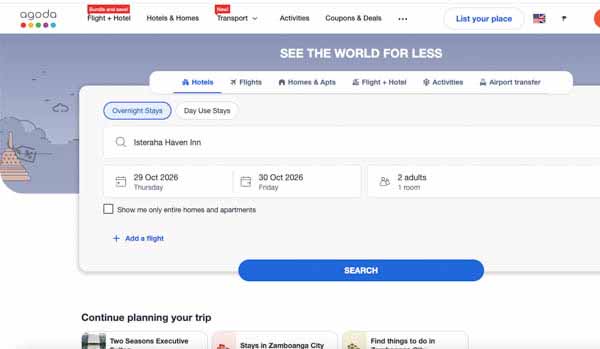
The interface skews slightly more complex than Booking.com’s, with more granular reporting broken out by device type and booking lead time. That data is genuinely useful if you’re trying to figure out whether your audience books last-minute or plans months ahead.
Skyscanner Affiliate Program
Skyscanner works differently than hotel-focused programs because it monetizes flight, hotel, and car rental searches rather than direct bookings. Payouts are typically cost-per-click or cost-per-acquisition depending on the partnership tier, which suits high-traffic sites better than niche blogs with modest visitor counts. It’s a strong fit for anyone building comparison tools, flight deal roundups, or destination guides where readers are actively searching for cheap fares.
Approval requires going through Skyscanner’s partnership team directly rather than a self-serve signup, and the vetting process can take a few weeks. Once approved, though, the platform’s brand recognition tends to lift click-through rates compared to lesser-known flight search tools.
GetYourGuide Affiliate Program
GetYourGuide focuses on tours, activities, and skip-the-line tickets, and it pays commissions of up to 8% per booking, among the strongest rates on this list. The 30-day cookie window is standard, but the average order value for activities and tours tends to be lower than hotel bookings, which affects total earnings even with the higher percentage.
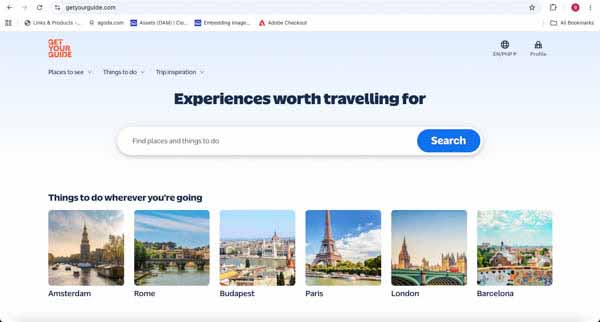
This is one of the better fits if content centers on things to do rather than where to stay. Combining it with a hotel-focused affiliate program to cover more of a traveler’s total trip spend is a strategy worth considering here, and among the best travel affiliate programs for supplementing lodging commissions with activity bookings, this one stands out for its reliable tracking and clear reporting dashboard.
Viator Affiliate Program
Viator, owned by Tripadvisor, competes directly with GetYourGuide but brings the weight of Tripadvisor’s review ecosystem and search traffic. Commission rates run around 8%, and the platform lists over 300,000 experiences worldwide, giving affiliates a wide net for linking specific city or activity pages. The cookie window sits at 30 days as well, consistent with most of the programs above.
Viator’s affiliate dashboard includes deep-linking tools that let you send readers directly to a specific tour listing rather than a generic search page, which tends to improve conversion rates noticeably compared to sending traffic to a homepage.
World Nomads Affiliate Program
Travel insurance affiliate programs get less attention than booking platforms, but World Nomads pays a flat commission, generally around 10-15% of the policy price, on every completed purchase. Insurance content converts differently than hotel or flight content because readers researching coverage are often close to finalizing trip plans already, meaning conversion intent tends to run higher.
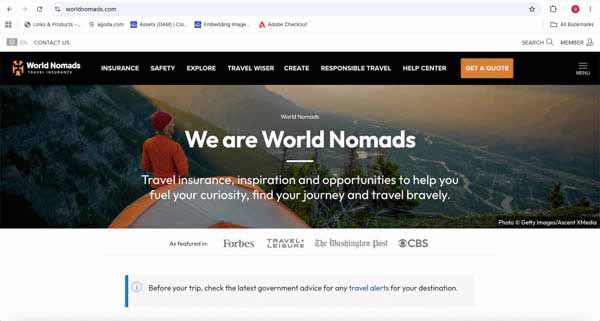
The application process is straightforward through the ShareASale or Impact networks, depending on which one World Nomads is currently routing through in a given region. Pairing insurance links with destination guides or packing lists tends to perform better than standalone insurance posts, since readers encounter the recommendation as part of natural trip planning rather than a hard sell.
Choosing the Right Mix
No single program covers every part of a traveler’s booking journey, so the strongest affiliate strategies usually combine two or three of these based on content focus. A destination guide site might pair Booking.com for lodging with Viator for activities, while a deal-focused site might lean harder into Skyscanner and Expedia. Track conversion data for at least 90 days before dropping any program, since seasonal booking patterns can make a slow first month look worse than it actually is over a full year.