
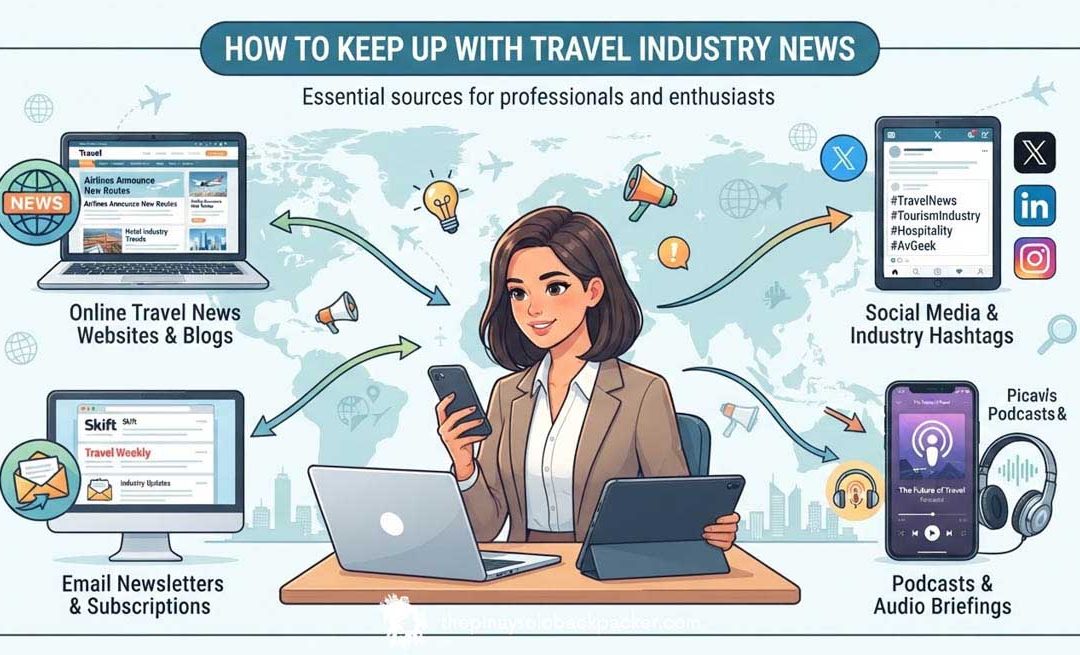
A hotel chain announces a new loyalty tier at 9 a.m. By noon, an airline quietly drops a route that’s been running for a decade. That afternoon, a country changes its visa rules with two weeks’ notice. Missing any one of these can mean a canceled trip, a lost upgrade, or a scramble to rebook flights before prices jump. The travel industry moves fast, and the people who stay ahead of it aren’t lucky — they’ve just built a system for catching what matters.
TRAVEL BLOG CONTENTS
Pick Three Sources You Trust and Ignore the Rest
Trying to read everything produces the opposite of being informed. It produces noise. Instead, choose two or three outlets that consistently break real stories rather than recycle press releases — think Skift, The Points Guy, or a regional outlet if you travel a specific corridor often.
Skift tends to cover the business side: mergers, earnings calls, airline strategy shifts. The Points Guy leans toward consumer-facing changes like award chart devaluations or new credit card bonuses. Pairing a business-focused source with a consumer-focused one gives a fuller picture without doubling your reading time.
Set Up Alerts for the Things That Actually Affect You
Generic news apps bury travel stories under politics and sports. A better approach is targeted alerts through Google Alerts or a tool like Feedly, set to specific keywords: the airlines you fly most, the destinations on your list, or terms like “visa requirement change” or “airline schedule cut.”

This turns a passive scroll into an active filter. Instead of checking travel industry news today and hoping something relevant appears, the relevant thing lands directly in your inbox. Ten minutes of setup saves hours of scrolling every week.
Follow the Regulators, Not Just the Reporters
Journalists report changes after they happen. Regulators and government agencies often post them first. The U.S. State Department’s travel advisories, the Transportation Security Administration’s website, and the European Union Aviation Safety Agency all publish updates directly, sometimes hours before a news outlet picks up the story.
Airlines and airports also post operational notices on their own sites — check the “travel alerts” or “advisories” page of any carrier you fly. These pages update in near real time during weather events, strikes, or system outages, which matters far more in the moment than a summary article published the next morning.
Use Social Media as a Radar, Not a Feed
Twitter, or whatever it’s called this month, remains one of the fastest places to catch breaking travel news, especially during disruptions like the 2022 Southwest holiday meltdown or a sudden airspace closure. Following airline customer service accounts, airport operations feeds, and a handful of aviation journalists gives a faster signal than waiting for a formal article.
The trick is following accounts, not hashtags. Hashtags get flooded with opinions and complaints. Accounts run by people who actually cover the beat — reporters at Reuters’ travel desk, or analysts who track flight data — post facts first and commentary second.
Build a Five-Minute Morning Routine
Consistency beats intensity here. Scanning headlines for five minutes every morning catches far more than an occasional deep dive once a month. Pick a time — coffee, commute, whatever fits — and scan three things: your chosen news source, your email alerts, and one social feed.

Skip stories that don’t apply to an upcoming trip or a card you hold. Save the ones that do into a note or bookmark folder. This habit takes less time than checking sports scores and pays off the first time a fare error or route change actually affects you.
Join a Community That Filters for You
Forums like FlyerTalk, r/awardtravel, or Slack groups built around points and miles do a version of aggregation that no algorithm can match. When a devaluation hits or a new transfer partner appears, someone in these communities usually flags it within the hour, often with screenshots and context.
These groups also catch nuance that headlines miss — like a fare sale that only applies to certain routes, or a hotel promotion with blackout dates buried in the fine print. Reading the comments, not just the announcement, often reveals whether a deal is worth acting on.
Know When to Act and When to Wait
Not every headline requires immediate action. A rumored merger takes months to finalize. A new route announcement doesn’t mean tickets are bookable yet. Learning to separate “interesting” from “urgent” prevents wasted energy and premature bookings.
The stories that require speed are usually the ones with a deadline attached: a mistake fare, a visa deadline, a schedule change affecting a booked flight. Everything else can wait a day or two for more details to surface.
Staying current doesn’t mean reading everything published about travel — it means building a small, reliable pipeline that surfaces what matters and ignoring the rest. Set the alerts once, pick sources that earn trust over time, and check in daily rather than obsessively. The goal isn’t to know everything happening in the industry; it’s to know the handful of things that could actually change a trip.