How to get to the biggest mosque in Zamboanga – Masji Sadik Mosque, DIY Travel Guide to Sadik Grand Mosque Zamboanga, Commute by jeep and tricycle to Masjid Sadik Mosque Zamboanga.
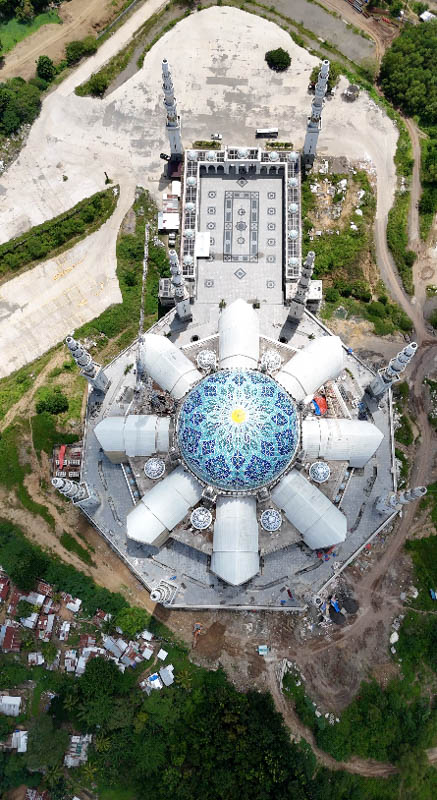
You can see Sadik Grand Mosque before you fully arrive. The neck-swiveling dome catches your attention first, followed by the minarets, arches, and the sheer scale of the structure. For the tourists encountering it for the first time, it is an impressive sight.
You see it first as an architecture. Then, gradually, you begin to see it as something else. A place of prayer. A gathering place. A statement of identity. A contemporary landmark rooted in a much older Islamic history. And perhaps most importantly, a place that is still becoming.
To understand the Sadik Grand Mosque is to understand something about Zamboanga itself: its long Islamic history, its Muslim communities, and the ways faith and identity continue to shape everyday life in Mindanao.
This is a story about the architecture, but more importantly, it is a story about people.
TRAVEL BLOG CONTENTS
SADIK GRAND MOSQUE ZAMBOANGA HISTORY
It’s easy to describe Sadik Grand Mosque simply as one of the largest mosque in the Philippines. But that description, while striking, is incomplete.
To understand why Sadik Grand Mosque matters, you have to look at Zamboanga’s Islamic history, which stretches far beyond the construction of this contemporary landmark. For centuries, Muslim communities have been part of the region’s cultural landscape, connected through maritime trade, kindship, religious networks, and relationship across the Sulu archipelago and Mindanao.
One important example is the Taluksangay Mosque, established in 1885 and recognized as an important site in Zamboanga’s Islamic history.
So, when you stand before Sadik Grand Mosque, you are not looking at the beginning of Muslim architectural presence in the city. You are looking at another chapter.
Its structure is contemporary. Its purpose is ancient. Its engineering is modern. But the rituals practiced inside belong to a tradition that stretches across centuries. Its physical scale is new. But the act of gathering for prayer is part of a much older human pattern. And perhaps this is what makes the Sadik Grand Mosque so compelling.
Traditions do not remain frozen in time. They adapt. They grow. They build. They create new spaces where old practices continue.
The foundation of a new, gigantic, contemporary mosque does not erase the older history of Islam in Zamboanga. Instead, it becomes another layer of that history.
MASJID SADIK MOSQUE ZAMBOANGA ARCHITECTURE
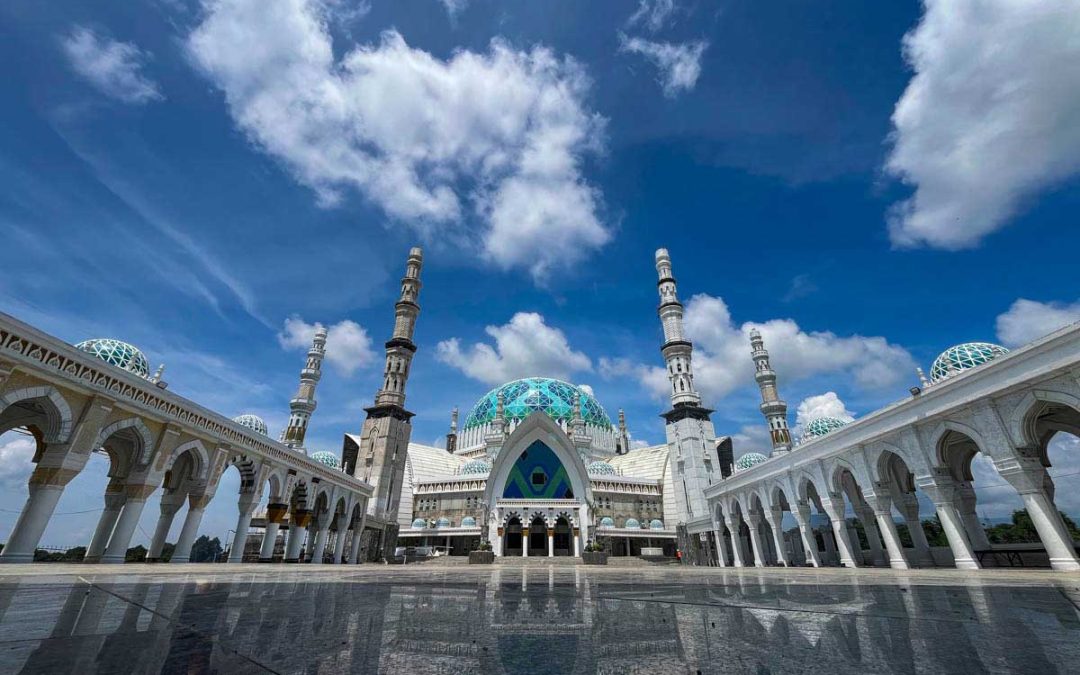
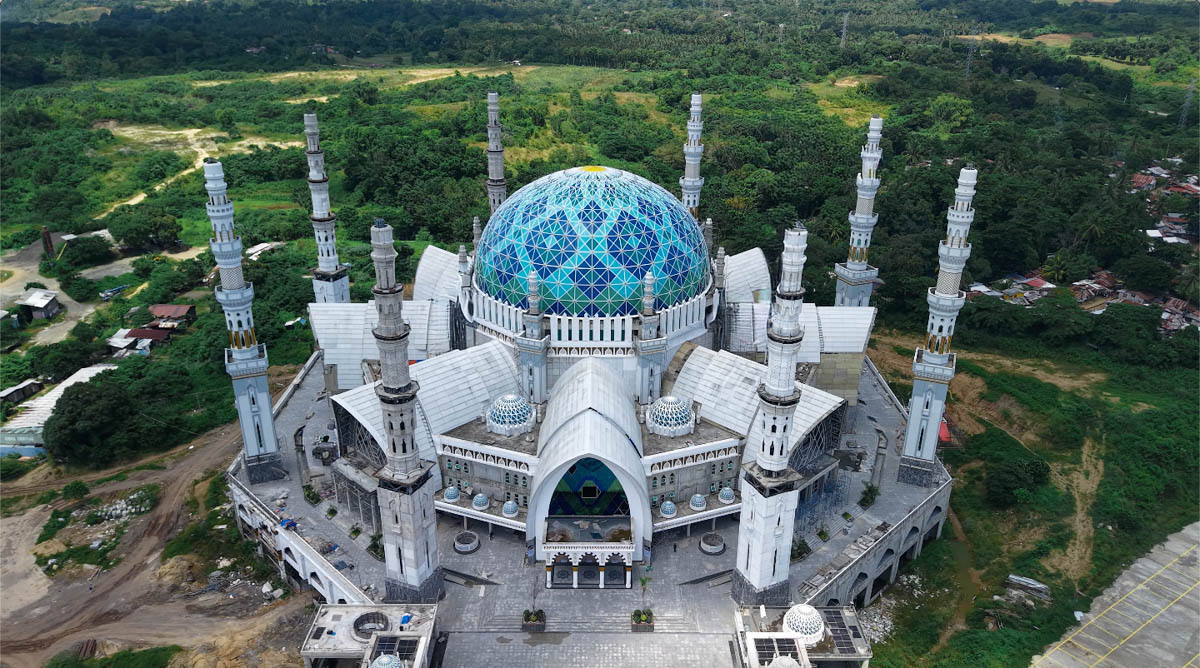
Architecture can communicate without saying a words. And Sadik Grand Mosque speaks through heights, repetition, proportion, patterns, and space. The colossal central dome creates a visual center. The minarets draw the eyes upward, while the arches and Islamic decorative motifs reinforce the building’s religious identity.
But monumentality isn’t simply about impressing visitors. It can communicate permanence. It can express devotion. It can make a community visible. And it can become a physical representation of collective identity.
This is where the Sadik Grand Mosque becomes particularly thought-provoking. It makes you ask, “Who built it? Who uses it? Who gathers here? And what does this place mean to the community?”
Seen this way, Sadik Grand Mosque is more than an example of Islamic architecture in Zamboanga City. It becomes architecture functioning as a social language.
SADIK GRAND MOSQUE DESIGN AND INTERIOR
Inside the Sadik Grand Mosque, architecture does something remarkable: it brings people together. When prayers begin, individuals who may have arrived separately stand side by side, forming rows and facing qibia.
Different ages. Different professions. Different family histories. Different lives. Yet for that moment, they become part of a single congregation. You may arrive alone. But you do not pray alone. This is something that you will easily overlook when you view the Sadik Grand Mosque as only a tourist attraction or architectural landmark.
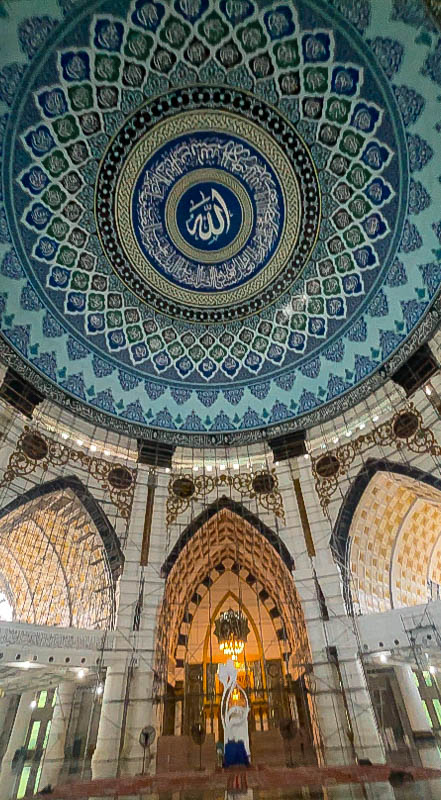
The dome may be what catches your eyes. The minarets may be what you photograph. But the deeper purpose of the building is the space between them, the space that allows people to gather, worship, and belong.
Perhaps the most important part of the architecture is not the façade at all. Perhaps it is the space that allows thousands of individuals to become one congregation.
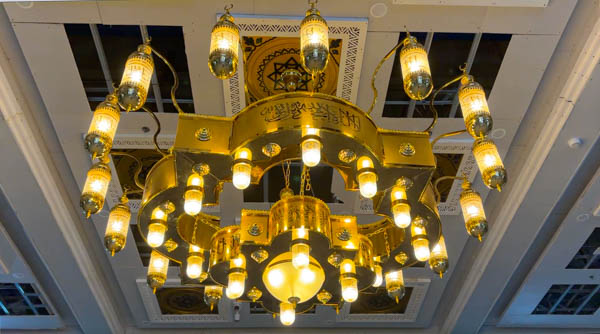
A building can exist without becoming a place. A place emerges through use. The movement of worshippers. The quiet before prayer. The conversation afterward. Families arriving together. Friends greeting one another. These ordinary moments are what transform architecture into social space.
A mosque is not only its walls. It is what happens within them. That distinction matters when experiencing Sadik Grand Mosque. It is not simply an enormous structure waiting for its future. Its future is already being created by the people who use it.
IS SADIK GRAND MOSQUE IN ZAMBOANGA THE LARGEST MOSQUE IN THE PHILIPPINES?
One of the descriptions often associated with Sadik Grand Mosque is that it is the largest mosque in the Philippines. Such claims should be treated carefully, however, because reported figures for capacity, dimensions, and projects can vary depending on the source and what exactly is being measured.
But perhaps the more interesting question is not the number. It is what scale does to human experience. Imagine thousands of worshippers occupying a single prayer space. Rows extending farther than the eye can comfortably follow. Standing. Bowing. Prostrating. Rising. Repeating. The individual becomes part of a much collective movement. And suddenly, the size of the building is no longer simply an architectural statistic. It becomes part of the experience worship.
SADIK MOSQUE ZAMBOANGA STILL UNDER CONSTRUCTION
Sadik Grand Mosque has developed through stages, with aspects of construction and finishing continuing while parts of the complex have already been used for worship. That gives the project a quality that a completely finished monument cannot quite reproduce. It feels less like a static object and more like a living process.
Because construction and cultural completion are two different things. A construction project can eventually be declared completed. A place is never quite finished.
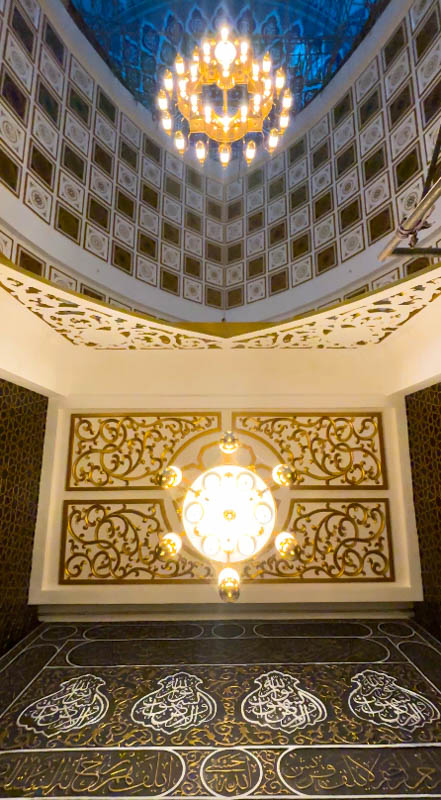
It takes generations. It happens when Friday prayers become part of rhythm of life. When lessons are taught. When celebrations take place. When memories accumulate within the walls. And those stories change what the building means. A building can be completed by construction workers. A place is completed by its people.
I looked back at the mosque one last time before we left. The first time I saw it, I was deeply enamored by the dome. Indeed, its scale and design is extraordinary enough to attract attention.
I wondered, how do I describe this in writing? Because travel blogging and social media often asks us to describe what a place looks like.
But sometimes, the more important question is: What does a place do? What does Sadik Grand Mosque do? It gathers people together. It shelters. It remembers. It represents. It gives a community a physical space where faith, identity, and belonging can be practice collectively.
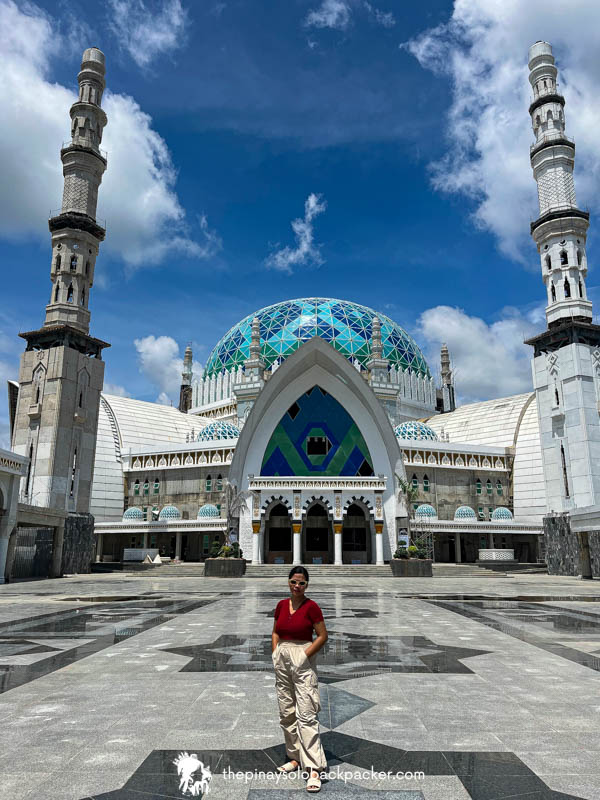
Sadik Grand Mosque offers more than another tourist spot to add to your Zamboanga Itinerary. It offers a way to understanding Zamboanga city. Through its architecture, you encounter Islam. Through its historical context, you encounter generations of Muslim presence in Mindanao. Through its people you encounter community. And through its scale, you encounter contemporary expression of aspiration and belonging. People arrive. Shoes are left at the entrance. Rows form. Voices become quieter. The congregation turns towards prayer.
Eventually, the enormous architecture recedes behind the simple human acts that give it meaning.
That is when Sadik Grand Mosque in Zamboanga becomes more than a landmark. Because sometimes, the most powerful way to see a place is to look beyond the structure itself.
Look beneath the dome. That is where the story begins.
-
- Sadik Grand Mosque Zamboanga City
- Address: Pasabolong, Zamboanga City, Zamboanga del Sur, Philippines
- GPS: 6°57’51.6″N 122°07’48.2″E
- Open Hours: Daily 8:00 AM – 4:00 PM
- Entrance Fee: FREE, open to non-Muslims, but access to the prayer area may depend on prayer times and mosque rules.
- How to get to the Grand Mosque Zamboanga:
- By jeepney: Look for a jeepney going to Pasabolong/Mercedes. Tell the driver you are getting off at Sadik Grand Mosque in Pasabolong. Fare is roughly (₱40/$0.64) and travel time is about 40 minutes depending on where you’re coming from.
- By tricycle: If you’re a small group, you can rent a tricycle for about (₱150/$2.39) no waiting to about (₱250/$3.98) with waiting, good for 3-4pax. Negotiate the price and waiting time. I think that’s already a fair price because Sadik Grand Mosque is quite far from Zamboanga City Center.
- Visitor Etiquette: Wear modest clothing, cover your shoulders and upper arms and avoid sleeveless or low-cut tops. Avoid shorts or short skirts. Best to wear long pants or long dress/skirts covering the ankles. Women are encouraged to bring headscarf/hijab. You need to remove your shoes before entering the mosque. If you’re not wearing appropriate clothing, don’t enter the mosque.
- When we visited Sadik Grand Mosque though, we weren’t informed beforehand we were visiting some mosques on that day, perhaps it was added last-minute to our Zamboanga City itinerary, so most of us weren’t wearing the appropriate clothing that’s why weren’t able to get inside the mosque. Also, part of Sadik Grand Mosque was still being constructed during our trip here. Photos of the Sadik Grand Mosque here is screenshot from Errol Bayona, a local tour operator and tour guide. You can book his Zamboanga tour through the link above.
- Travel Tip: If you’re going to Sadik Grand Mosque for sightseeing and taking photos, aim for morning 8:00 AM – 10:00 PM or afternoon around 3:00 AM – 5:00 PM, rather than during major prayer periods.
ZAMBOANGA CITY TOURS
-
ZAMBOANGA CITY TOUR: RESERVE HERE
-
STA. CRUZ ISLAND/PINK BEACH TOUR: BOOK HERE
-
ZAMBOANGA ALL-IN TOUR: RESERVE HERE
WHERE TO STAY IN ZAMBOANGA
Travel Tip: Use my promo codes for discounted rates.
✅ SOLOKLOOK – Klook
✅ SOLOAGODA (up to 5x use) – Agoda Hotels CLAIM CODE HERE
✅ PINAYSOLO (up to 5x use) – Agoda activities CLAIM CODE HERE
✅ PINAYSOLO (unlimited use) – Star Cruises
- TWO SEASONS EXECUTIVE HOTEL
- LOCATION: Zamboanga City
- BOOK HERE OR RESERVE HERE
- WINZELLE SUITES
- Location: Lim Avenue, Zamboanga City
- RESERVE HERE OR BOOK HERE
- LM METRO HOTEL
- Location: Zamboanga City
- BOOK HERE OR RESERVE HERE
- HOTEL PRIMERA
- Location: Canelar Moret Street, Zamboanga City
- BOOK HERE OR RESERVE HERE